Matt
Hillbilly ElegyMatt is a firefighter who enters J.D. Vance’s family life when Mom begins dating him in the fall after J.D. turns thirteen. J.D. likes him from the outset and later describes him as his favorite of Mom’s partners; their connection lasts beyond the relationship, since they continue to keep in touch. In the memoir, Matt is a comparatively kind presence within a family life shaped by grief, conflict, and repeated upheaval, though kindness alone cannot make his household with Mom and J.D. stable.
Identity and Introduction
Matt is introduced as a younger man who works as a firefighter. The memoir gives no account of how he and Mom meet beyond noting that they begin dating, but it makes J.D.’s immediate response clear: he adores Matt and ranks him above Mom’s other men. That early affection gives Matt a personal significance beyond his role as Mom’s boyfriend. J.D. later says they still keep in touch, showing that their bond is not confined to the period when Matt lives with the family.
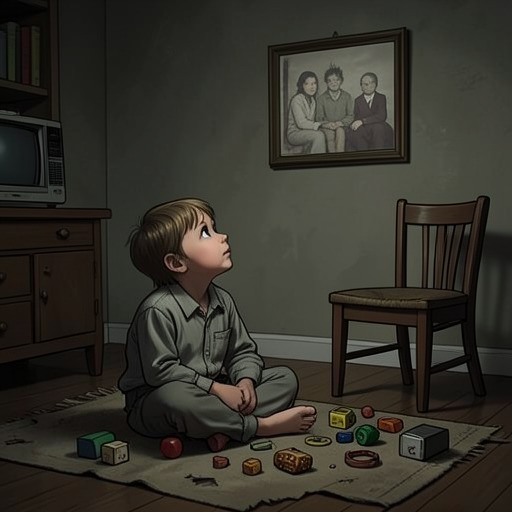
The first scene involving Matt is grounded in an ordinary evening at home. J.D. is watching television and waiting for Mom to return from work with dinner, a bucket of KFC. He has also been given two practical responsibilities: to find Lindsay in case she is hungry, and to carry food to Mamaw once Mom arrives. The details place Matt’s introduction amid the routines of a family where children help manage daily needs and look after one another. They also establish the domestic setting just before Papaw’s death abruptly changes the household’s emotional landscape.
Presence During Family Grief
After Papaw dies, the family members respond in sharply different ways. J.D. stays close to Mamaw and turns to reading the Bible; Lindsay spends much of her time with friends and keeps moving; Mom sleeps more and becomes increasingly prone to anger. In this setting, Matt is among the people around Mom as she struggles with grief. A few days after the funeral, J.D. sees Mom in her front yard, distraught and shouting at people close to her. Matt is one of those she attacks verbally. He is not shown provoking the confrontation or answering it; the scene instead records the pressure of Mom’s grief spilling into her relationships.
Police arrive during the disturbance. J.D. runs over to try to calm Mom, but an officer takes charge of the situation, and Mamaw eventually takes J.D. and Lindsay with her. The narrative does not establish what happened to Matt afterward or how he understood the scene. His presence matters because it places him among the people Mom lashes out at during a crisis, rather than presenting their relationship as separate from the family’s wider instability.
Practical Support and Household Life
Matt’s role is also practical. In the period after Papaw’s death, Lindsay and J.D. largely fend for themselves rather than regularly turning to Mamaw, whom J.D. worries about burdening. Sometimes Matt or Tammy brings them food. The memoir does not specify how often Matt helps, what food he brings, or whether he has any part in other household arrangements. Still, his assistance is one of the concrete ways adults outside the children’s immediate household help them through a period with little structure.
J.D. and Lindsay share responsibility for getting by: Lindsay is a recent high school graduate, while J.D. has just started seventh grade. Their food is often simple, including Hamburger Helper, TV dinners, Pop-Tarts, and cereal, and the memoir leaves uncertain who pays the bills. Matt’s occasional help therefore belongs to a broader, informal pattern of support, not a dependable system that resolves the children’s difficulties. J.D. remembers that Lindsay, rather than Matt, directly intervenes when he gets drunk with her friends and lectures him about substance abuse. The distinction keeps Matt’s contribution specific: he helps with food at times, while Lindsay takes the lead in setting a boundary with her younger brother.
Relationship with Mom and Its Limits
Later, J.D. lives with Mom and Matt. He describes the fighting in the home as relatively normal by his own standards, while recognizing that Matt may have experienced it differently. The household consists of the three of them, and J.D. expects that the arrangement will fail. His account presents their conflict as persistent, not as a single disagreement that can be readily repaired; he regards the relationship’s eventual breakdown as only a matter of time.
J.D. nevertheless emphasizes Matt’s kindness. He and Lindsay make a rueful joke that nice men do not survive encounters with their family. The joke reflects the siblings’ familiarity with relationships ending amid conflict, but it is not evidence that Matt is weak or that the family has a single cause for its troubles. It captures the gap between J.D.’s fondness for Matt and his pessimism about whether a kind partner can withstand the household’s repeated strain.
Departure from the Household
During J.D.’s sophomore year, Mom comes home one day and announces that she is getting married. J.D. initially assumes she means Matt, despite having expected them to separate because they fight every day. Mom clarifies that the man she plans to marry is not Matt: her boss at a local dialysis center, whom she has recently begun dating, asked her to dinner, and she agrees to marry him a week later. The episode marks the end of Matt’s place as Mom’s partner in the account, although the memoir does not detail the timing or circumstances of his departure.
Matt’s arc is consequently defined by contrast rather than transformation. He arrives as someone J.D. welcomes, appears as one of the people caught in Mom’s grief, contributes practical help, and shares a home with her and J.D. that the narrator sees as untenable. His later absence from Mom’s marriage does not erase the connection J.D. retains with him. Within the memoir’s larger pattern of unstable adult relationships, Matt stands out as both genuinely liked and unable to make domestic life with Mom endure.